Scottsdale Public Library Website Redesign
Redesigning the Scottsdale Public Library website through research, testing, and real change.
Industry
Human Services
Timeline
My Role
UX Researcher
Platform
January 2025 - May 2025
Desktop, Mobile
Project Overview
I conducted this usability study for the Scottsdale Public Library, a four-branch system serving a large and diverse community across Scottsdale, AZ. What I found was a website that reflected years of staff-centric thinking rather than the needs of the people actually using it.Problem Statement
Internal stakeholders had already identified four areas of concern: accessibility, navigation, language, and long-term sustainability. But no research had been done to understand how real users experienced these issues. I set out to answer one question:
Does the SPL website actually serve the people who need it most? If not, where and why does it fail them?
Users
Assumed User Groups
I split the users into 2 groups based on information from stakeholders and a brief look over the website.Well-Served
Digital content users
Underserved
Visually impaired users
D.I.Y. patrons
Technologically inept users
Non-native English speakers
Physical space users
Caregivers of children
Young adults (18-30)
Research and Design Process
1 | User Testing
I screened and identified 6 participants who fit the Underserved Users group. User testing included multiple methods:
Task-based observations with 3 participants
Card-sorting activity with 3 participants
WAVE accessibility audit across all web pages.
2 | Analyzing Insights
Once all data was gathered and analyzed, the following insights were identified:
WCAG accessibility violations
A 72-link navigation built around library structure rather than user logic
Language was jargon-heavy and written for staff
No sustainable maintenance practices had been established
3 | Proposed Design Solutions
Incorporating stakeholder requests and the analyzed insights, solutions were designed to address the issues:
Restructuring the site's information architecture using a proposed navigation sort and wireframe, both grounded directly in user card sorting results
Development of an accessibility fix spec with WCAG-compliant color replacements drawn from the City of Scottsdale Brand Guide, plus code-level fixes for redundant alt text and title text
Creation of a user-friendly language guide giving staff practical word-for-word substitutions for jargon-heavy language, paired with rollout plan for implementing changes to reduce staff and user distress
4 | Stakeholder Presentation
Authored report and shared with library management. Report included:
User-testing methodology and results
Data-backed insights
Proposed wireframes for IA
WCAG edits and code
User-friendly copy
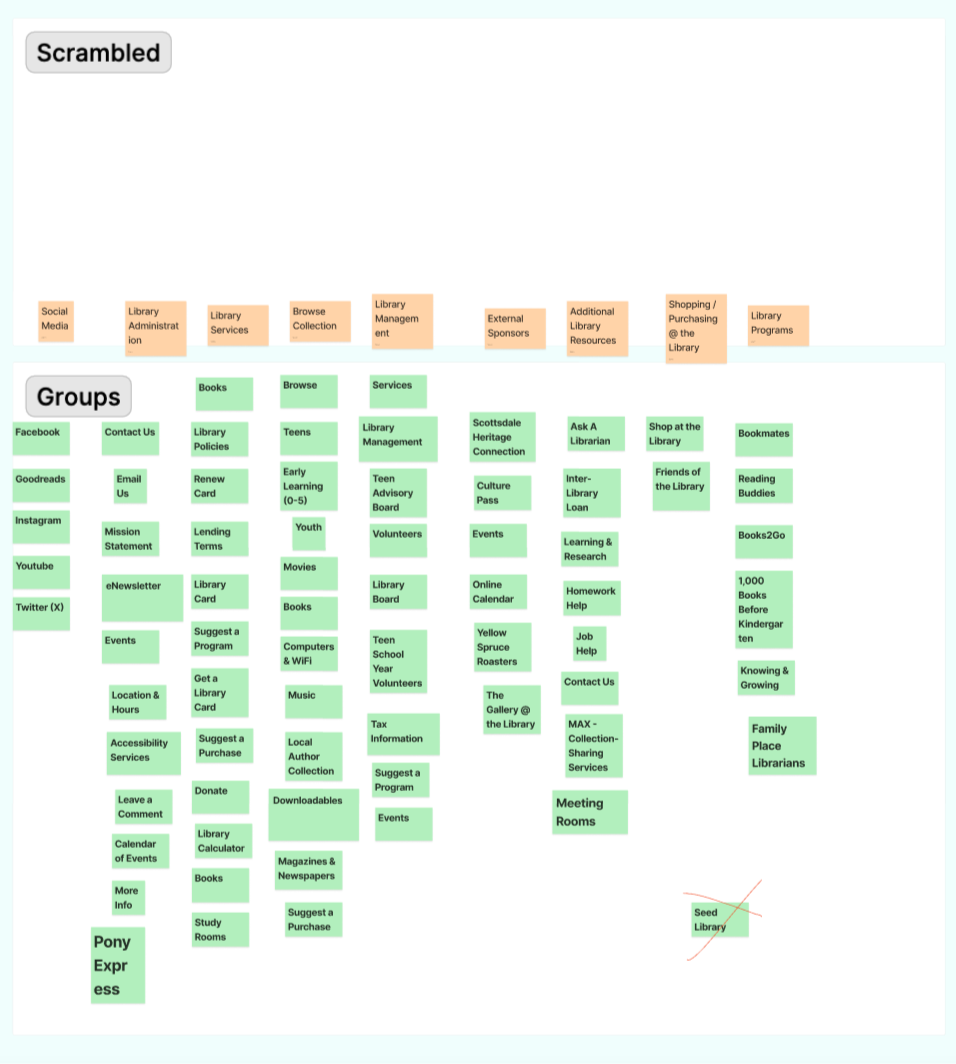
Participant 1 Card Sort
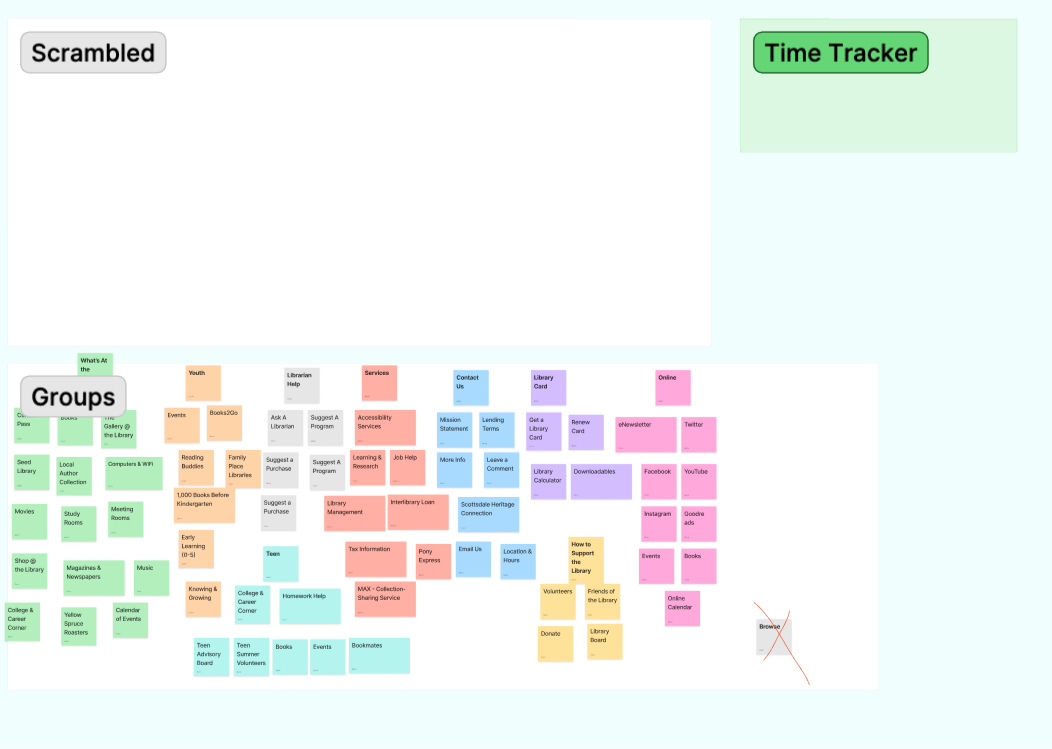
Participant 2 Card Sort
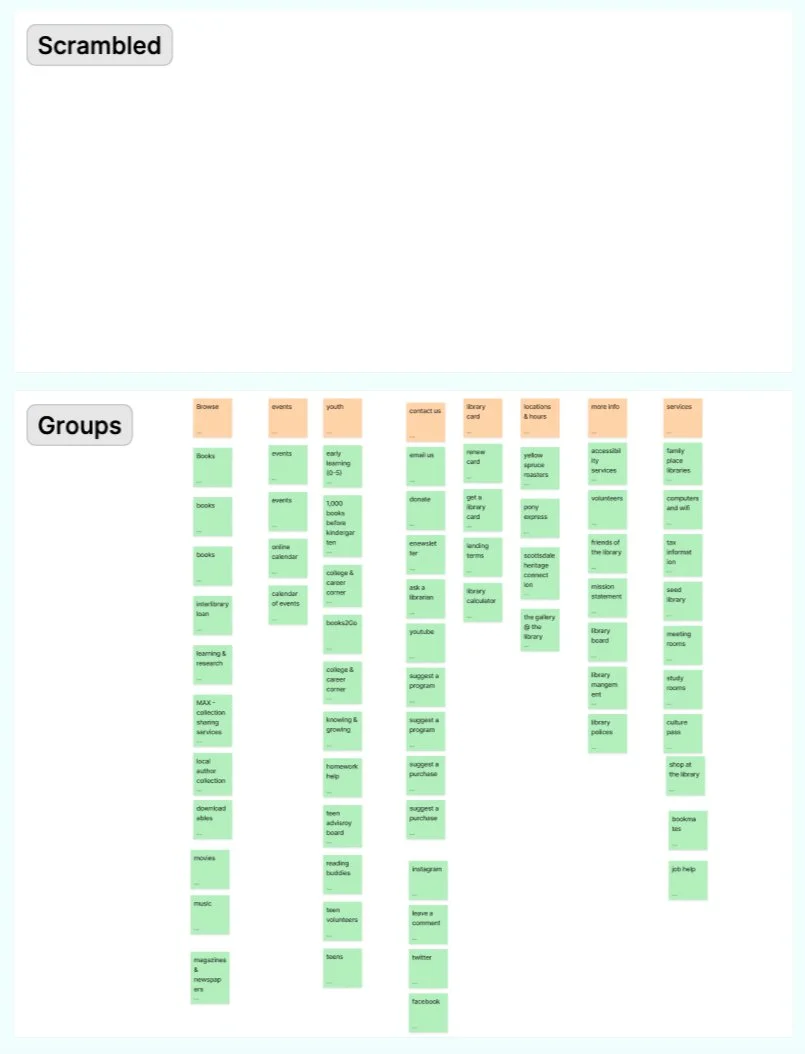
Participant 3 Card Sort
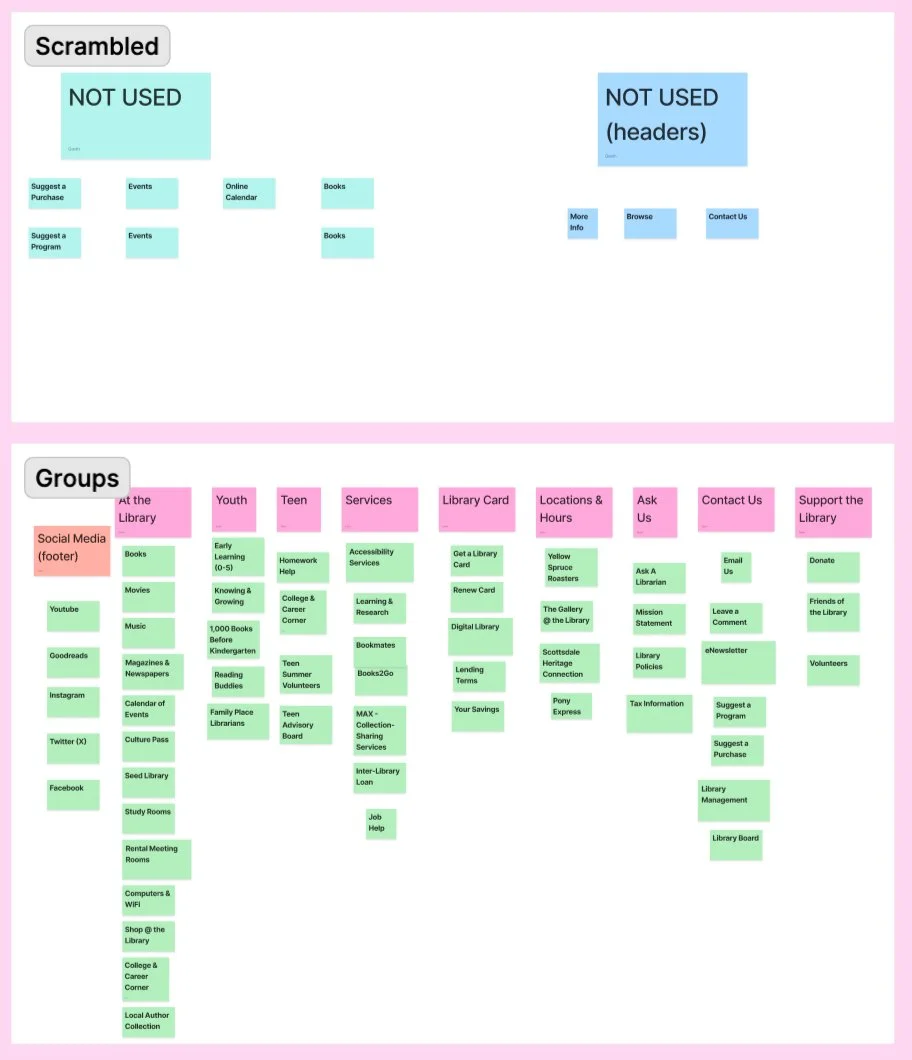
Final Proposed Card Sort
Outcomes
The site is more accessible. Color contrast, alt text, and language updates mean more users can actually find what they came for. These changes were especially meaningful for visually impaired users who previously had to call the Library Helpline just to access basic information.
1.
Navigational insights from real users made it into the live site, moving the IA closer to how people actually think. Small but deliberate changes to labeling and structure reduced the guesswork that was causing users to fail even the most common tasks.
2.
A dedicated task force was created to keep the site current, turning a one-time study into lasting organizational change. This was the most systemic outcome of the project, ensuring the library has the infrastructure to maintain an accessible, user-centered website long after the research wrapped up.
3.
Key Learnings
Mixed Methods Build Stronger Cases
1
Using three different research methods meant every finding was backed by more than one data point. That made recommendations harder to dismiss and gave stakeholders the confidence to act on them.Screening Participants Matters
2
I excluded anyone with a library or information science background from card sorting to prevent domain knowledge from skewing the results. It was an extra step that made the data significantly more reliable and representative of real users.Research Can Drive Organizational Change
3
I went in expecting to influence a website. I came out having contributed to the creation of a task force. That taught me that thorough, well-communicated research has the potential to change not just a product but the way a team thinks about maintaining it.